First Aid Tips for Newcomers in Canada: 8 Ways to Be Ready for an Emergency
First 2 Aid Inc. · September 8, 2026
Moving to a new country means learning a lot of new things at once, including what to do if there's an emergency. In Canada, the emergency number is 911 for police, fire and ambulance. The call is free from any phone.
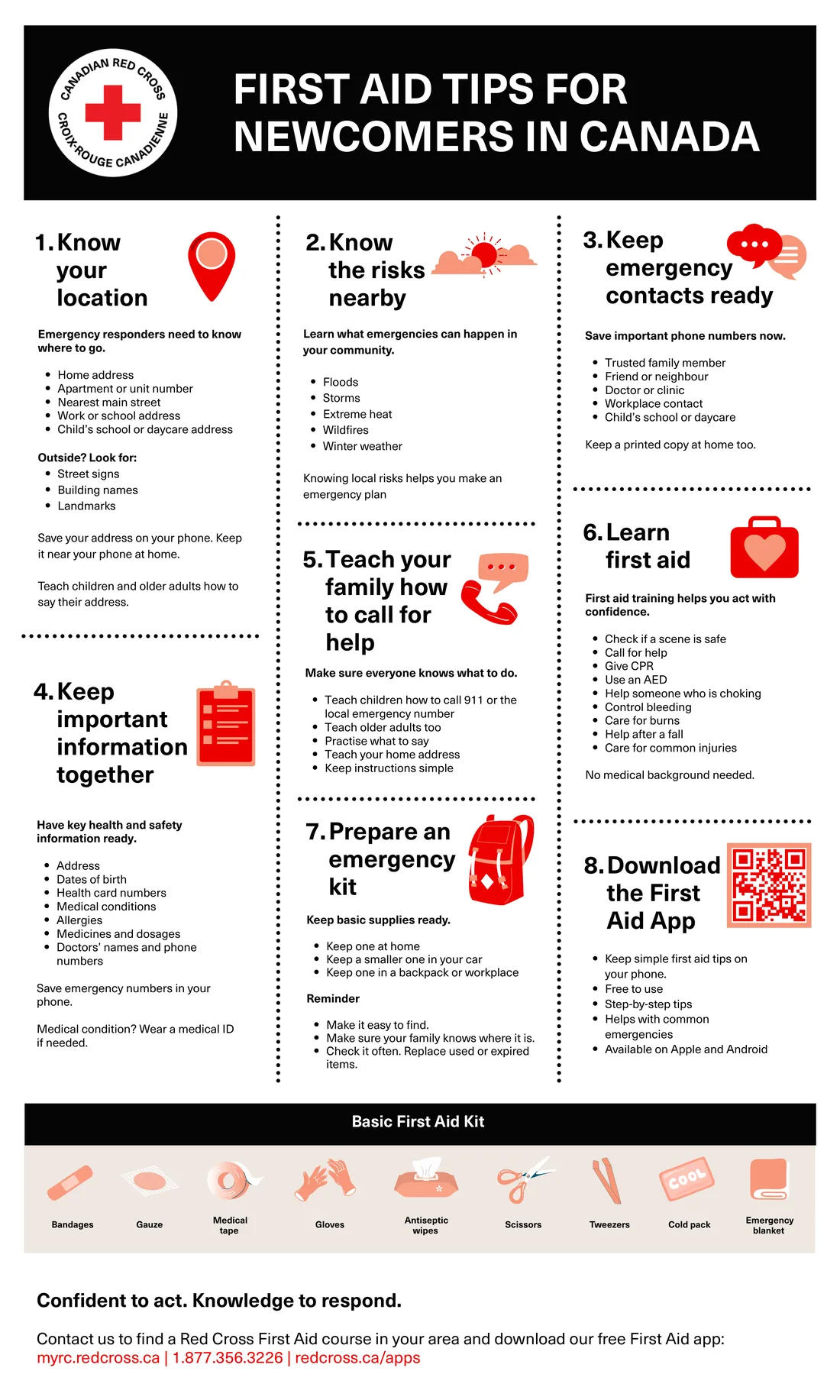
Here are 8 simple ways to prepare yourself and your family, based on Canadian Red Cross advice.
1. Know your location
Emergency responders need to know exactly where to go. Make sure you and your family know:
- Your home address and apartment or unit number
- The nearest main street
- Your work or school address
- Your child's school or daycare address
If you're outside, look for street signs, building names and landmarks. Save your address in your phone, and keep it written down near your phone at home. Teach children and older family members how to say your address in English.
2. Know the risks nearby
Learn what emergencies can happen where you live. In Southwestern Ontario, including London, these can include:
- Winter weather: snowstorms, ice and extreme cold
- Extreme heat in summer
- Storms, including thunderstorms and high winds
- Floods
- Wildfire smoke
Knowing the local risks helps you make an emergency plan.
3. Keep emergency contacts ready
Save these phone numbers now:
- A trusted family member
- A friend or neighbour
- Your doctor or clinic
- Your workplace
- Your child's school or daycare
Keep a printed copy at home too, in case your phone battery dies.
4. Keep important information together
Have key health and safety information in one place:
- Addresses and dates of birth
- Health card numbers (in Ontario, your OHIP card)
- Medical conditions and allergies
- Medicines and dosages
- Doctors' names and phone numbers
If you or a family member has a medical condition, consider wearing a medical ID.
5. Teach your family how to call for help
Make sure everyone knows what to do:
- Teach children how to call 911
- Teach older adults too
- Practise what to say: your name, your address, and what happened
- Keep instructions simple
6. Learn first aid
First aid training helps you act with confidence. In a first aid course, you learn how to:
- Check if a scene is safe and call for help
- Give CPR and use an AED
- Help someone who is choking
- Control bleeding
- Care for burns, falls and common injuries
You don't need a medical background. First aid certificates are also useful for many jobs in Canada, and some employers require one.
7. Prepare an emergency kit
Keep basic supplies ready: one kit at home, a smaller one in your car, and one in your backpack or at work. Make it easy to find, make sure your family knows where it is, and check it often to replace used or expired items.
A basic first aid kit should include:
- Bandages and gauze
- Medical tape
- Gloves
- Antiseptic wipes
- Scissors and tweezers
- A cold pack
- An emergency blanket
8. Download the free First Aid app
The Canadian Red Cross First Aid app is free on Apple and Android. It gives you simple step-by-step tips for common emergencies, right on your phone. Find it at redcross.ca/apps.
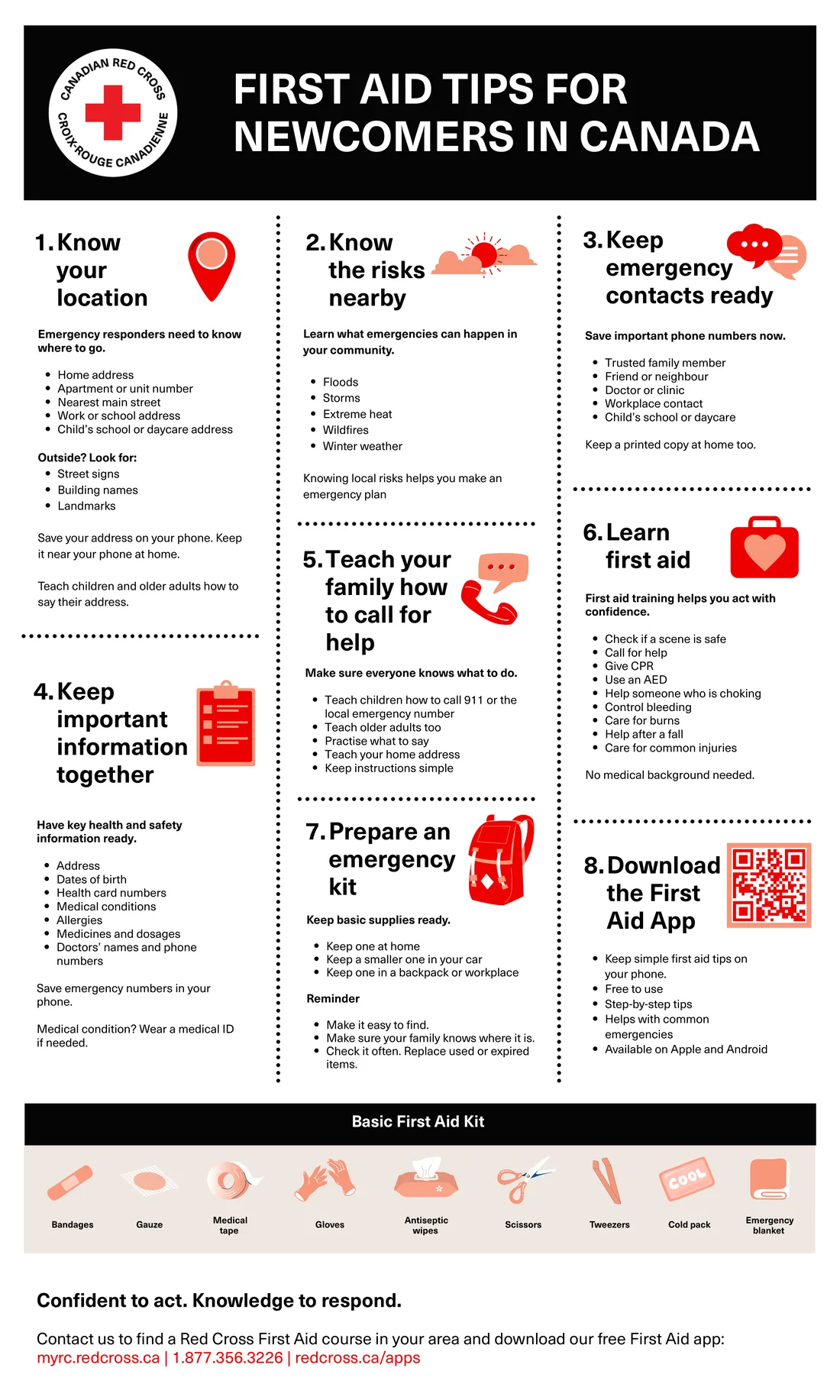
Download the free poster
Download the First Aid Tips for Newcomers poster (PDF)
Poster: Canadian Red Cross.
Learn first aid in London, Ontario
First 2 Aid Inc. is a Canadian Red Cross Training Partner in London, Ontario. Our first aid and CPR courses are open to everyone, and a first aid certificate can also help you find work in Canada. See upcoming courses or contact us with any questions.