
How to Do CPR on a Baby: 4 Steps Every Parent Should Know
First 2 Aid Inc. · September 15, 2026
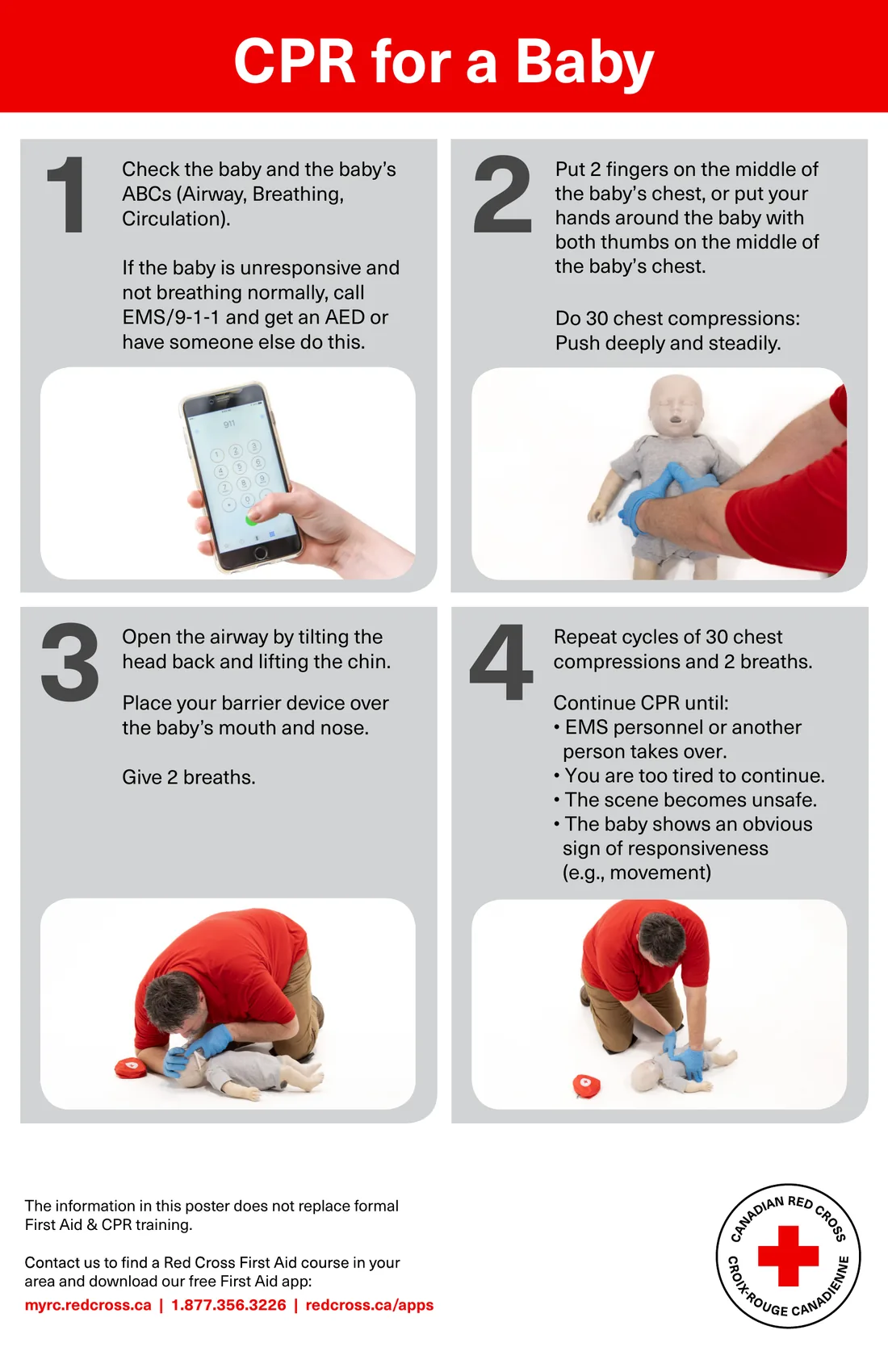
No parent, grandparent or babysitter wants to think about a baby who stops breathing. But if it happens, knowing what to do in the first few minutes can make all the difference, and baby CPR is different from adult CPR in a few important ways.
Here are the 4 steps, based on the Canadian Red Cross guidelines.
Step 1: Check the baby and call 911
Check the baby and their ABCs: Airway, Breathing and Circulation. Tap the baby's foot and call their name to see if they respond.
If the baby is unresponsive and not breathing normally, call 911 and get an AED, or have someone else do this while you start CPR.
Step 2: Give 30 chest compressions
Use one of these two hand positions:
- Put 2 fingers on the middle of the baby's chest, just below the nipple line, or
- Put your hands around the baby's body with both thumbs on the middle of the chest.
Give 30 chest compressions. Push deeply and steadily: about one third of the depth of the baby's chest, at the same speed as adult CPR (100 to 120 a minute). Let the chest come back up fully after each push.
Step 3: Open the airway and give 2 breaths
- Open the airway by gently tilting the head back and lifting the chin. With a baby, a small tilt is enough.
- Place your barrier device over the baby's mouth and nose.
- Give 2 breaths. Use small, gentle breaths, just enough to make the chest start to rise.
Step 4: Keep going
Repeat cycles of 30 chest compressions and 2 breaths. Keep doing CPR until:
- Paramedics or another trained person takes over
- You're too tired to continue
- The scene becomes unsafe
- The baby shows an obvious sign of life, such as movement
If an AED arrives, turn it on and follow its instructions. Many AEDs have pads or a setting for children and babies.
How is baby CPR different from adult CPR?
| Adult | Baby (under 1 year) | |
|---|---|---|
| Hand position | Two hands, centre of chest | 2 fingers or 2 thumbs, middle of chest |
| Breaths | Cover the mouth | Cover the mouth and nose |
| Head tilt | Full tilt | Small tilt |
| Breath size | Normal breath | Small, gentle puff |
The pattern of 30 compressions and 2 breaths stays the same.
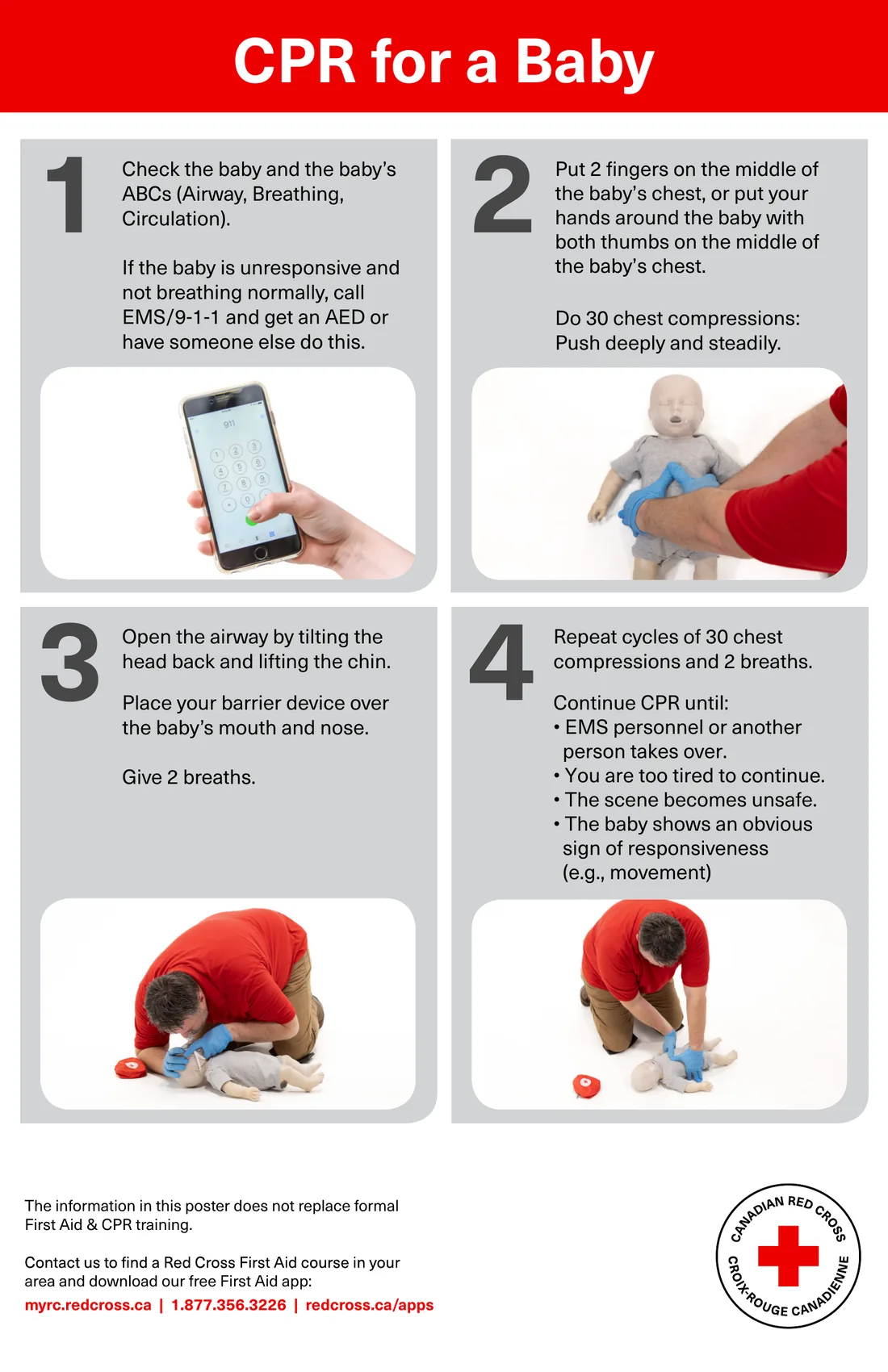
Download the free poster
Put a copy on the fridge or in the nursery, and share it with babysitters and grandparents.
Download the CPR for a Baby poster (PDF)
Poster: Canadian Red Cross. This information does not replace formal First Aid & CPR training.
Learn baby CPR hands-on
Reading about infant CPR is helpful, but practising on an infant manikin with an instructor is how you build real confidence. Choose a course with CPR Level C, which covers adults, children and babies.
First 2 Aid Inc. teaches Canadian Red Cross CPR Level C and first aid courses in London, Ontario. See upcoming courses.