Call, Push, Shock: How to Help Someone in Cardiac Arrest
First 2 Aid Inc. · September 18, 2026
When a person's heart suddenly stops (cardiac arrest), every minute counts. The person you help will usually be someone you know: a family member, a coworker, a friend. The good news is that you don't need to be a medical expert to help. You only need to remember three words: Call, Push, Shock.
What does cardiac arrest look like?
A person in cardiac arrest will usually:
- Collapse suddenly
- Not respond when you tap them and speak loudly
- Not breathe, or breathe in gasps that aren't normal
If you see this, act right away.
1. CALL 911
Call 911 or ask someone else to call. If there's more than one person nearby, send one person to call and another to find an AED (automated external defibrillator). AEDs are often in schools, gyms, arenas, malls and offices, usually near the entrance or in a hallway, marked with a heart and lightning bolt sign.
Put the phone on speaker so the dispatcher can guide you while you help.
2. PUSH hard and fast
Start CPR with chest compressions right away:
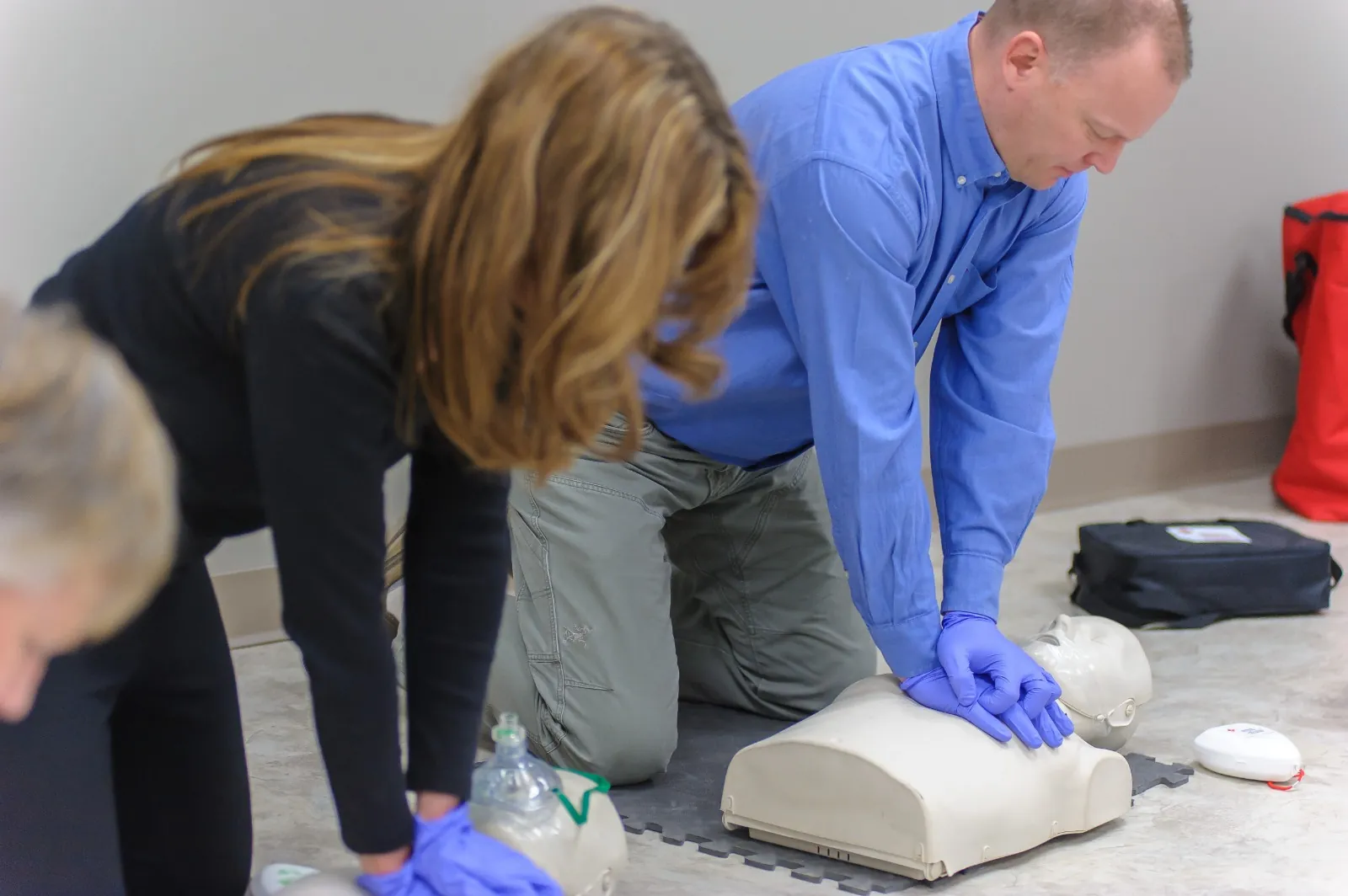
- Kneel beside the person and put the heel of one hand in the centre of the chest, with your other hand on top.
- Keep your arms straight and your shoulders over your hands.
- Push hard and fast: at least 5 cm (2 inches) deep, at a rate of 100 to 120 compressions a minute.
- Let the chest come all the way back up between compressions.
- If you're trained and have a barrier device, give 2 breaths after every 30 compressions. If you're not trained, keep doing compressions without stopping.
Don't worry about hurting the person. Without CPR, a person in cardiac arrest will not survive. Pushing hard is how you keep blood moving to the brain.
3. SHOCK with an AED
As soon as the AED arrives, use it. AEDs are made for people with no training:
- Turn it on. It will start talking and tell you what to do.
- Expose the chest and attach the pads exactly as the pictures on the pads show: usually one on the upper right chest and one on the lower left side.
- Stand clear while the AED checks the heart rhythm. Make sure no one is touching the person.
- If it tells you to shock, make sure everyone is clear, then press the button.
- Restart CPR right away after the shock, and keep following the AED's voice prompts until paramedics take over.
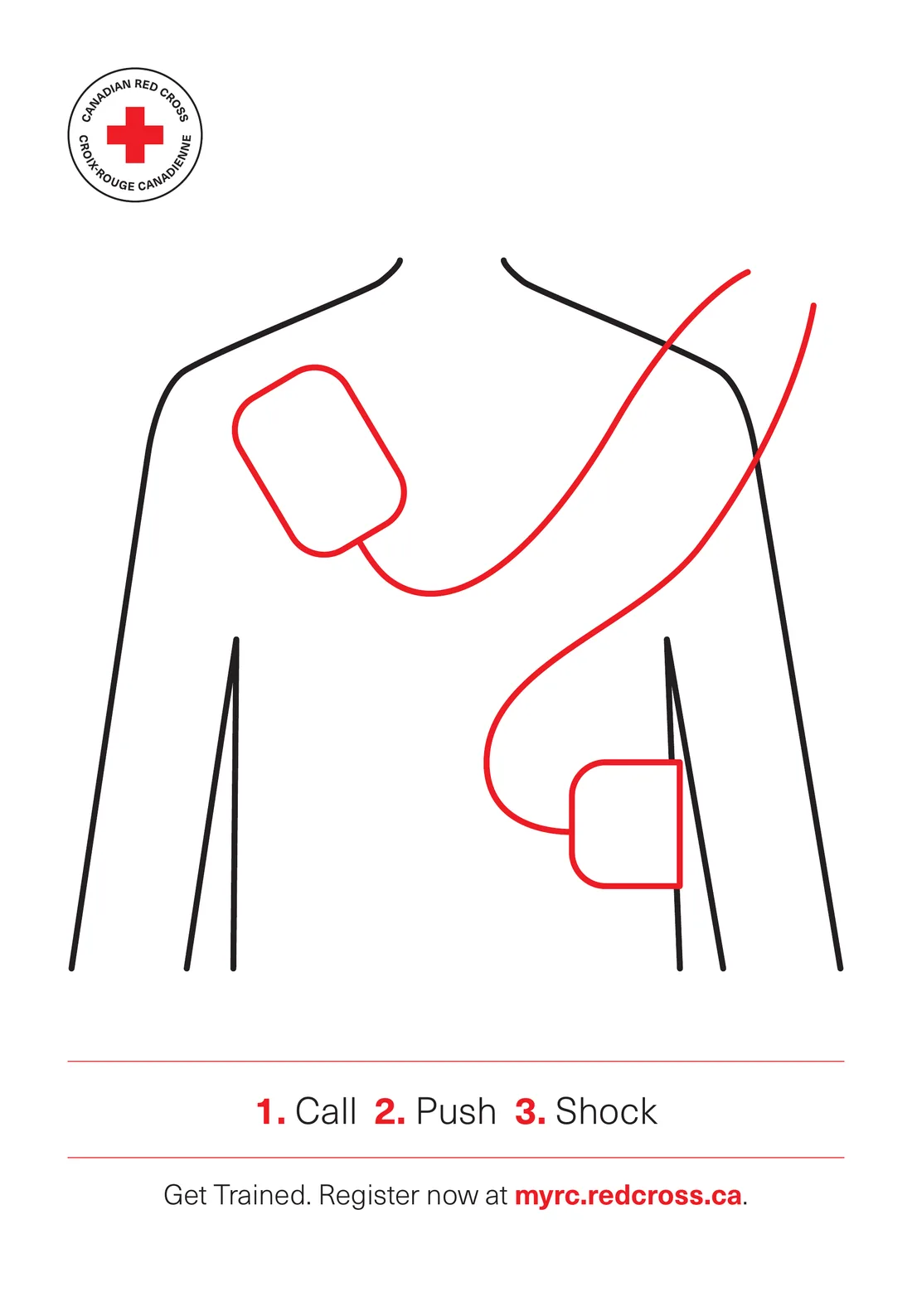
Download the free poster
Put this poster next to your workplace AED so anyone can follow the steps.
Download the Call, Push, Shock poster (PDF)
Poster: Canadian Red Cross. This information does not replace formal First Aid & CPR training.
Get hands-on CPR and AED training
Knowing the steps and actually doing them under pressure are two different things. In a CPR course, you practise compressions on a manikin until you know what the right depth and speed feel like, and you use a training AED so the real one isn't new to you.
First 2 Aid Inc. teaches Canadian Red Cross CPR and AED courses in London, Ontario, including CPR Level C (adults, children and babies) and BLS for healthcare providers. See upcoming courses.