Signs of Opioid Poisoning and How to Respond with Naloxone
First 2 Aid Inc. · September 11, 2026
Opioid poisoning (often called an overdose) can happen to anyone who takes opioids, including people using prescription pain medication. Opioids can slow down or stop a person's breathing. Recognizing the signs early and knowing how to respond can save a life.
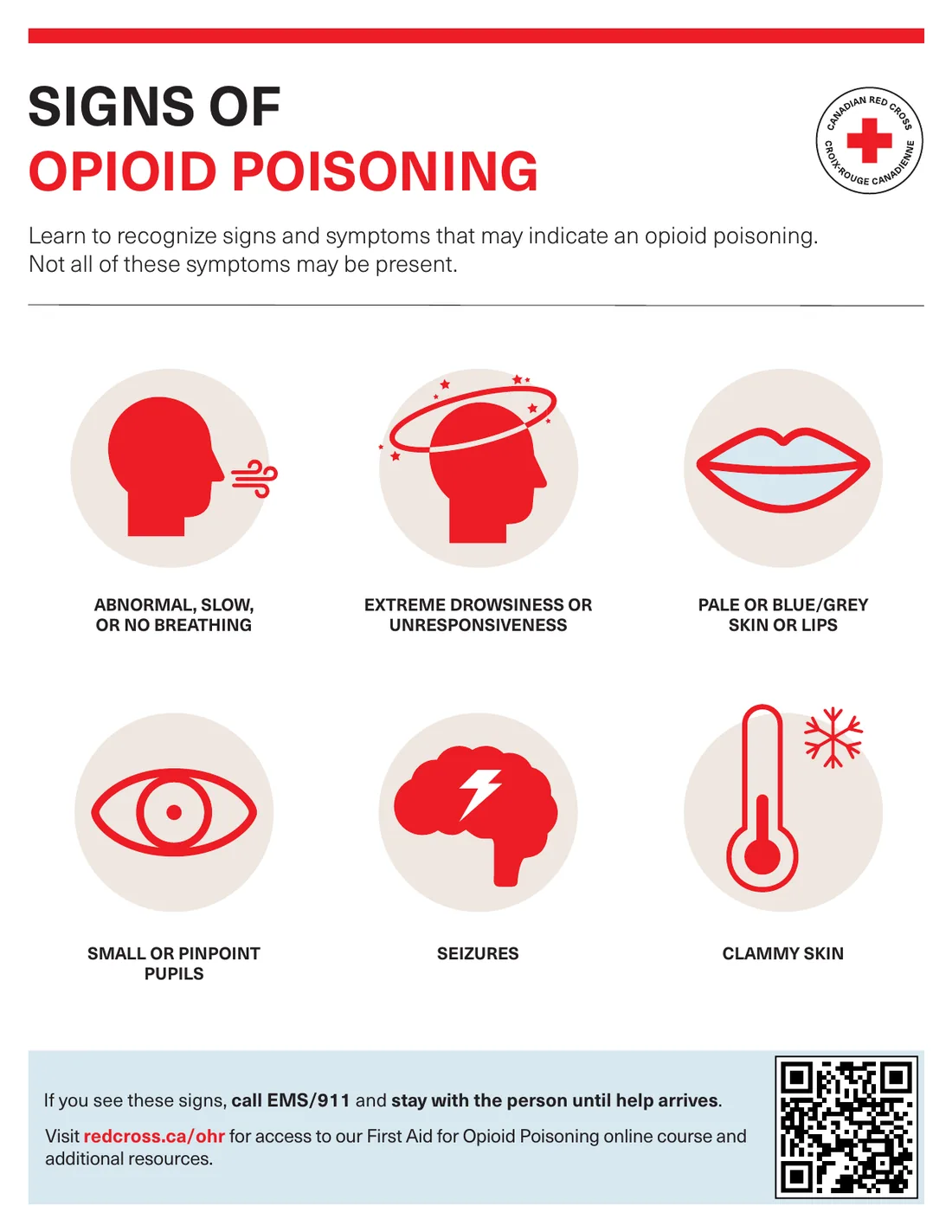
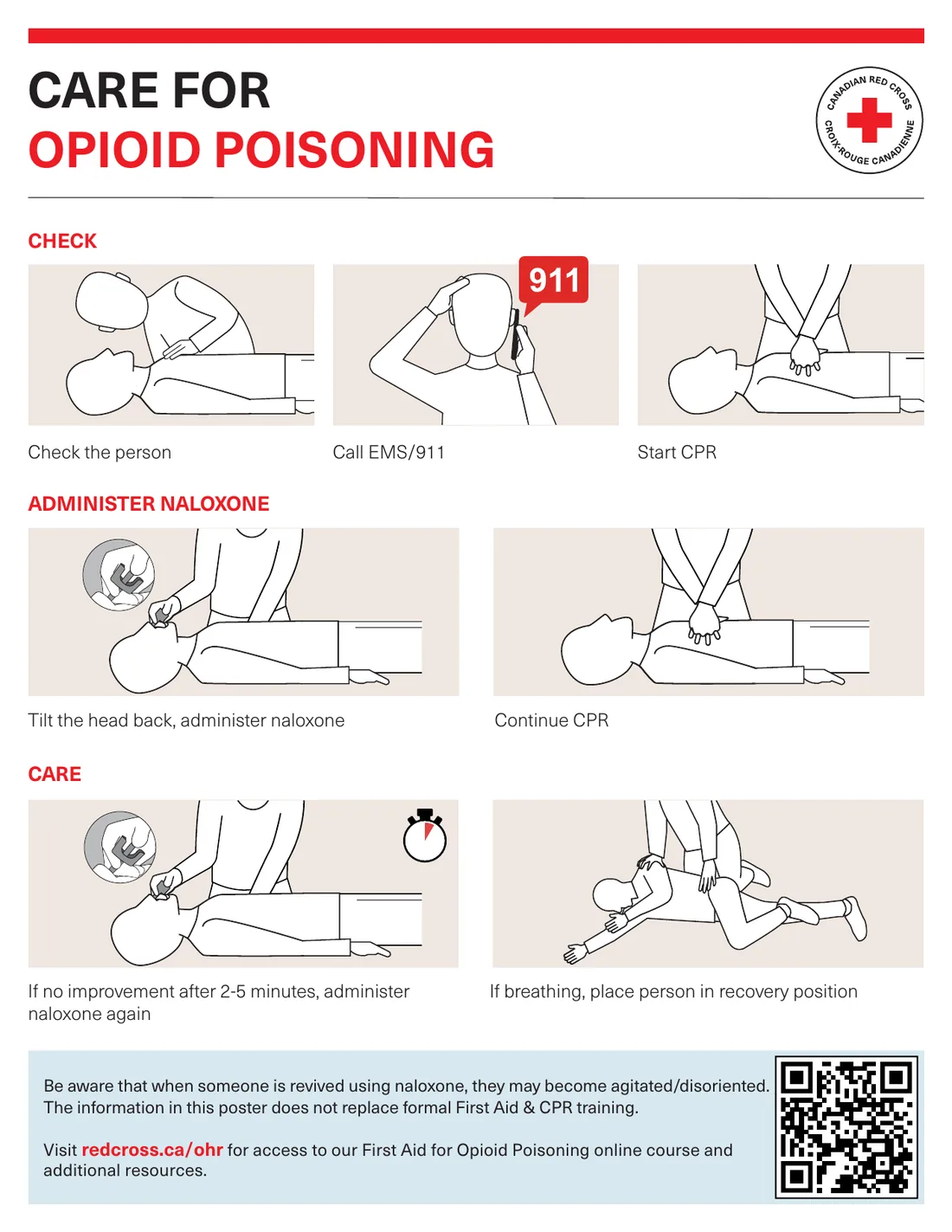
6 signs of opioid poisoning
Watch for these signs. A person may not have all of them.
- Abnormal, slow or no breathing
- Extreme drowsiness or unresponsiveness: you can't wake them up
- Pale or blue/grey skin or lips
- Small or pinpoint pupils
- Seizures
- Clammy skin
If you see these signs, call 911 and stay with the person until help arrives.
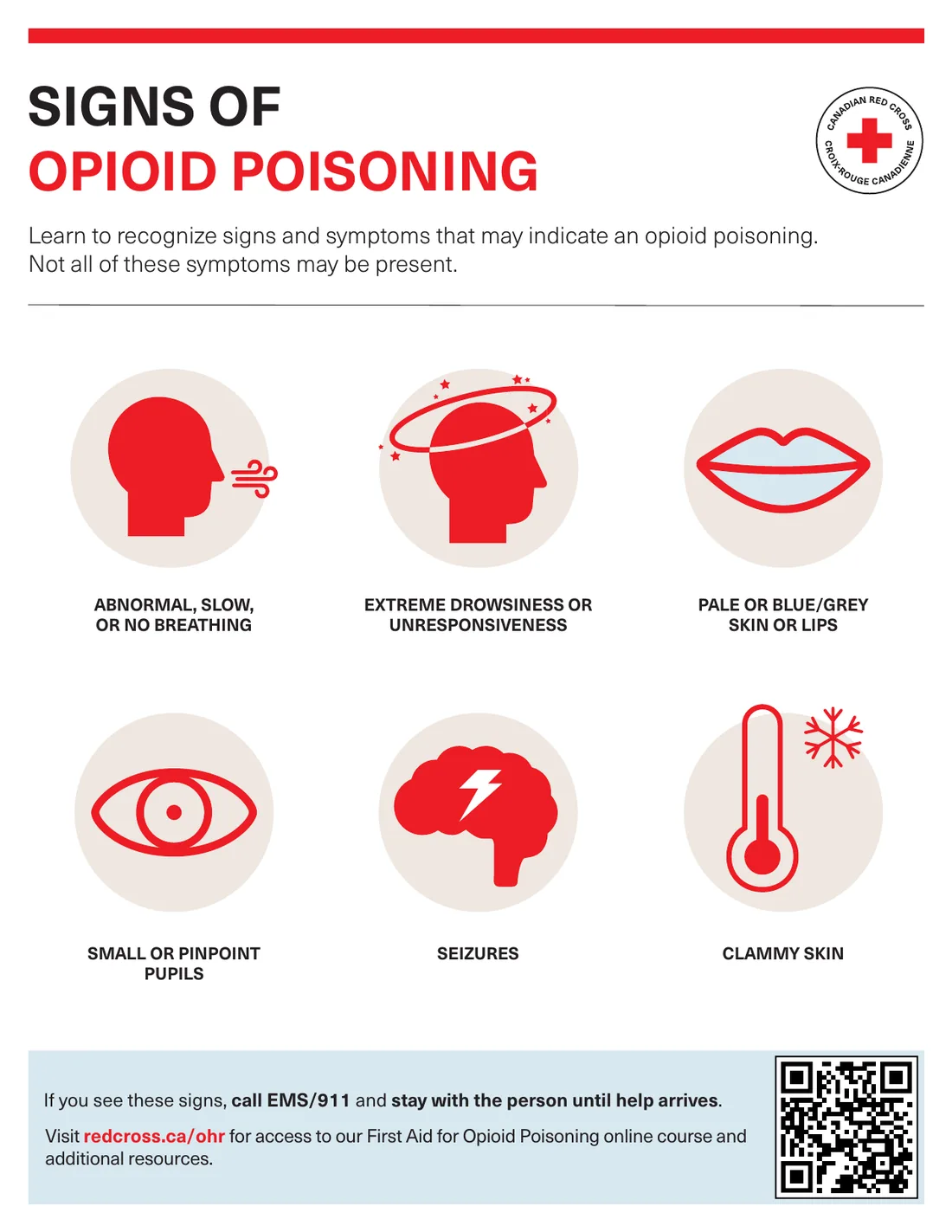
What to do: Check, Administer naloxone, Care
1. Check
- Check the person. Try to wake them by speaking loudly and tapping their shoulder.
- Call 911, or have someone else call.
- If the person isn't breathing normally, start CPR.
2. Administer naloxone
Naloxone is a medication that can temporarily reverse opioid poisoning. It comes as a nasal spray or an injection.
- Tilt the person's head back and give the naloxone according to the kit instructions.
- Continue CPR.
3. Care
- If there's no improvement after 2 to 5 minutes, give another dose of naloxone.
- If the person starts breathing, place them in the recovery position (on their side) and stay with them.
Naloxone wears off, and the opioids may still be in the person's body. Even if they wake up, they still need medical care, so wait for paramedics.
Be aware: when someone is revived with naloxone, they may wake up agitated or confused. Stay calm, explain what happened, and keep them company until help arrives.
Where to get naloxone in Ontario
Free naloxone kits are available at many Ontario pharmacies and public health units, often without a prescription. Ask your pharmacist. Carrying a kit is a good idea if you, a family member or someone you work with uses opioids.
Calling 911 is protected
Some people hesitate to call for help because drugs are involved. Canada's Good Samaritan Drug Overdose Act offers legal protection from certain drug possession charges to people who call 911 during an overdose and to people at the scene. The most important thing is to call.
Download the free posters
Posters: Canadian Red Cross. This information does not replace formal First Aid & CPR training. For the Canadian Red Cross First Aid for Opioid Poisoning online course, visit redcross.ca/ohr.
Be ready to respond
Opioid response starts with the same skills as any emergency: checking the person, calling 911 and giving good CPR. First 2 Aid Inc. teaches Canadian Red Cross first aid and CPR courses in London, Ontario. See upcoming courses.